
How to Set Up a Home Mandir: Direction, Vastu & Essentials

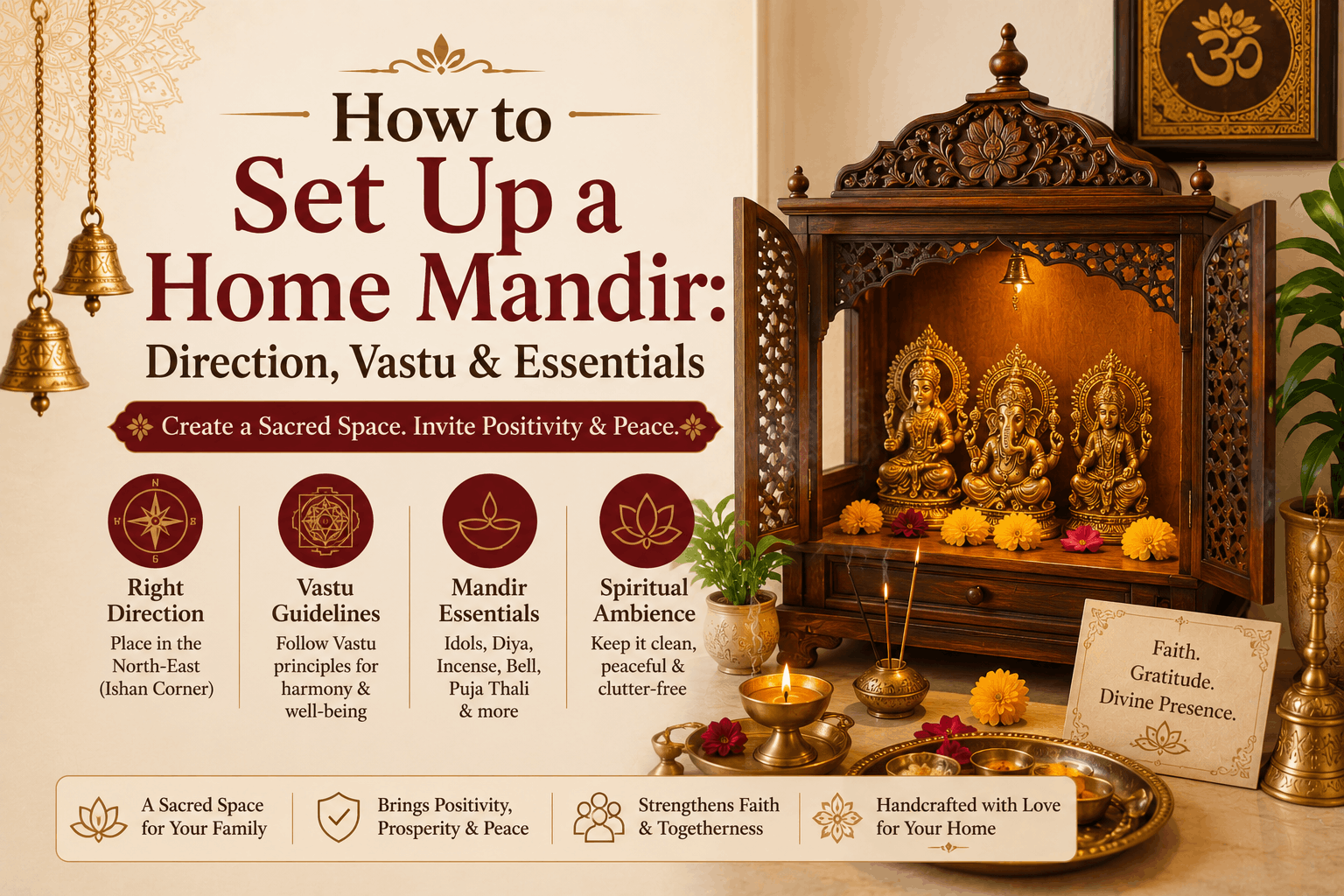
| Quick answer The ideal spot for a home mandir is the north-east (Ishaan) corner, with idols placed so the deity faces west and you face east while praying. Keep idols raised on a pooja bajot, never directly on the floor, and limit the mandir to the essentials — idols, a singhasan, a pooja thali, a diya, and an aasan. Clean, uncluttered, and east-facing is the rule that matters most. |
A home mandir is the calmest corner of an Indian home — but setting one up often raises more questions than answers. Which direction should it face? What goes inside it? Does Vastu really matter? This guide keeps it simple and practical: the right direction, the Vastu rules worth following, and the essentials you actually need. As a direct handicraft manufacturer in Jasdan, Gujarat, we make most of these temple pieces in-house — so the advice below comes from years of helping families set up their pooja space the right way.
🧭 Best Direction for a Home Mandir (Vastu)
The north-east corner (Ishaan kon) is the most auspicious place for a home mandir. In Vastu Shastra this zone is linked to positive energy and clarity of mind, which is why it is the traditional choice for a pooja room or temple. If a north-east spot isn’t possible, east or north are the next-best alternatives.
The direction you face while praying matters just as much. Position the idols so the deity faces west, which means you’ll be facing east — the direction of the rising sun — during aarti and prayer.
📐 Vastu Rules Worth Following
You don’t need to memorise a rulebook. These few principles cover almost everything that matters:
- Raise the idols. Idols should never sit directly on the floor — place them on a pooja bajot or chowki so they stay elevated and respected.
- Avoid bedrooms and under stairs. Don’t set up a mandir inside a bedroom, under a staircase, or sharing a wall with a bathroom. A dedicated wall or shelf is ideal.
- Mind the idol size. For a home, idols should be modest — generally under 9 inches. Oversized idols are considered better suited to public temples.
- No chipped or broken idols. Damaged idols or torn photos are removed and respectfully replaced. Keep only what is whole and well-kept.
- Light in the south-east. The diya or oil lamp is the Agni element, best lit in the south-east zone of the mandir.
🛕 Essentials for a Home Mandir Setup
A good mandir is built around a few well-made pieces, not clutter. Here’s what genuinely earns its place:
- The mandir unit. The structure itself — wooden or meenakari. Browse the full Mandir & Temple range to find a size that fits your wall or shelf.
- Pooja bajot / chowki. The raised platform under your idols. Our pooja bajot and chowki come in sizes from compact 4×4 to a 15×15 inch base.
- God singhasan. A throne for your main deity adds height and dignity. See the God Singhasan & Beds collection, including Laddu Gopal beds.
- Pooja thali. For diya, agarbatti, kumkum and akshat during aarti. A decorative pooja thali keeps your ritual items together and looks beautiful on display.
- God jhula. If you keep Laddu Gopal or a bal-deity, a god jhula (swing) is a heartfelt, traditional addition.
If you’re choosing pieces as a housewarming or griha pravesh gift, our guide to the best meenakari gift items and our note on Vastu & spiritual gift items are useful companion reads.
📊 Home Mandir Essentials — Quick Reference
| Essential | What it does | Vastu / placement tip |
| Mandir / temple unit | The main structure that houses the deities | Place in the NE corner; idols face west so you face east while praying |
| Pooja bajot / chowki | Raised platform so idols sit above floor level | Never place idols directly on the ground — always elevate on a bajot |
| God singhasan | Throne seat for the main deity | Keep the principal deity slightly higher than the rest |
| Pooja thali | Holds diya, agarbatti, kumkum, akshat for aarti | Store on the right side; keep it clean and clutter-free |
| Diya / oil lamp | Lights the mandir; symbol of positive energy | Light in the SE zone of the mandir (Agni direction) |
| God jhula | Cradle/swing for Laddu Gopal or bal-deities | Centre it so the deity stays visible and undisturbed |
✨ How to Arrange Idols & Photos Correctly
- Centre the main deity. Your principal deity (often Ganesh, or the family’s ishta-devata) sits in the centre, slightly raised on a singhasan.
- Keep a gap between idols. Idols shouldn’t touch or face each other directly. Leave a little breathing space.
- Ganesh first. Lord Ganesh is traditionally worshipped first, so a Ganesh idol or image near the entrance of the mandir is auspicious.
- Photos slightly behind idols. Framed deity photos go behind or above the idols, never in front of them.
🧹 Keeping the Mandir Clean & Cared For
A mandir’s energy comes from how it’s kept. Wipe idols and the meenakari pieces gently with a soft, dry cloth — avoid harsh chemicals, as enamel and gold-polish finishes are delicate. Clear out wilted flowers and burnt-out diyas daily, and refresh water and offerings each morning. A clean, uncluttered mandir always feels more peaceful than a crowded one.
💡 Quick Vastu Facts
- North-east is called Ishaan kon — the most sacred zone in Vastu and the ideal place for a home temple.
- Idols facing west let the worshipper face east, aligning prayer with the rising sun.
- Raising idols on a bajot isn’t just Vastu — it’s a basic mark of respect followed across Indian homes.
❓ Frequently Asked Questions
Which direction should a home mandir face?
Ideally place the mandir in the north-east corner with idols facing west, so you face east while praying. East or north are good alternatives if north-east isn’t available.
Can I keep a mandir in my bedroom?
It’s best avoided in Vastu. If space is tight and a bedroom is the only option, keep the mandir in the north-east of the room, raised on a shelf or bajot, and cover or close it at night.
Why should idols not be placed directly on the floor?
Placing idols on the ground is considered disrespectful. A pooja bajot or chowki elevates the deity and is the standard practice in Indian homes.
What is the ideal idol size for a home mandir?
Keep home idols modest — generally under 9 inches. Larger idols are traditionally meant for public temples rather than home pooja rooms.
What are the must-have items for a home mandir?
At minimum: the mandir unit, a singhasan for the main deity, a pooja thali, a diya, and an aasan. A god jhula is a lovely addition if you keep Laddu Gopal.
Do you take bulk orders for temple and pooja items?
Yes. We’re a direct manufacturer in Jasdan, Gujarat and welcome bulk and wholesale orders with customization — ideal for societies, temples, weddings, and corporate gifting. Message us on WhatsApp for a quote.
💝 Set Up Your Mandir with Hanumant Handicraft
From pooja bajots and singhasans to pooja thalis and god jhulas, every piece is handcrafted in-house at factory prices, with free shipping on orders over ₹399 across India. Explore the full Mandir & Temple collection or contact us for bulk and custom requirements.