
Brass Idols Under ₹1000 for Home Mandir

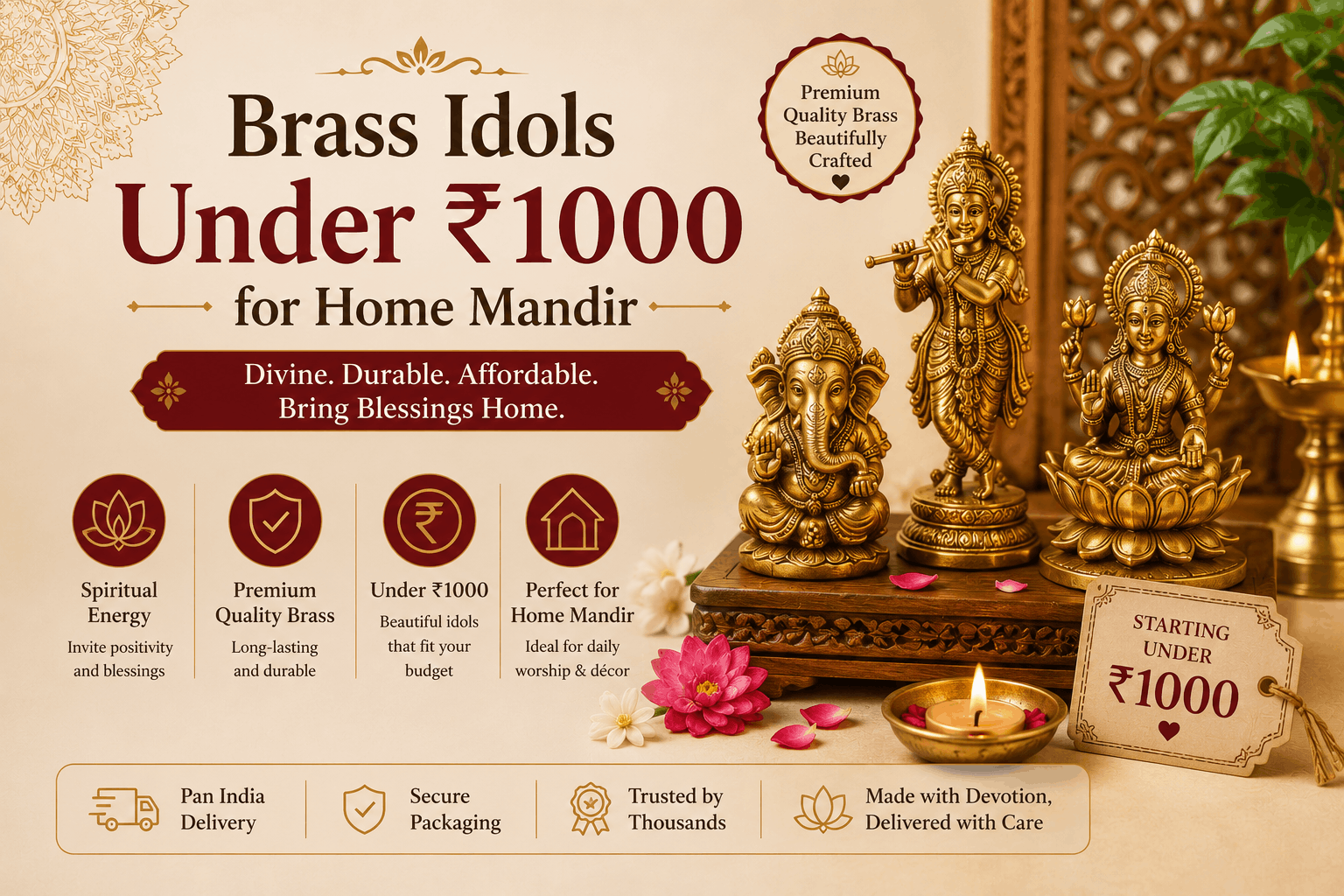
Quick answer: For a home mandir, the best brass idols under ₹1000 are small 2–4 inch murtis — Ganesh, Lakshmi, Krishna, Hanuman, and Ram Darbar being the most popular. At this budget you’re looking at solid or hollow-cast pieces in the 3–4 inch range, ideal for daily pooja shelves and compact temples. Prioritise pure brass (not brass-plated), a stable base, and clean facial detailing over sheer size. Pair the idol with a singhasan or pooja chowki so it sits at the right height, and you have a complete, auspicious setup well within ₹1000.
A brass idol is often the very first thing families place in a new mandir — and for good reason. Brass carries centuries of ritual significance, doesn’t rust (it contains no iron), and ages into a warm golden patina rather than deteriorating. The catch is that “brass idol” covers everything from a ₹300 tabletop Ganesh to a ₹25,000 temple centrepiece. This guide focuses on the sweet spot: genuinely good pieces you can bring home for under ₹1000, and how to set them up so they look like they cost far more.
🪔 Why Brass Is the Right Choice for a Home Mandir
Before picking a deity, it helps to understand why brass has been the default mandir metal in Indian homes for generations.
- It’s rust-proof and long-lasting. Brass is a copper-zinc alloy with no iron content, so it never rusts. A well-kept brass idol outlives the family that bought it and is frequently passed down.
- It’s considered auspicious. In Vastu and traditional practice, brass is linked to warmth, prosperity, and the Sun’s energy — which is why it’s favoured for daily worship over aluminium or resin.
- It ages gracefully. Silver tarnishes, plated metals flake, but brass simply deepens in tone. Many devotees prefer the antique golden patina that develops over years.
- It suits every mandir size. A 3-inch brass Ganesh works on a studio-apartment shelf just as naturally as it does inside a full temple setup.
- It photographs and gifts beautifully. Brass reads as premium, which is why compact brass idols are among the most popular housewarming and Griha Pravesh gifts.
🙏 Best Brass Idols Under ₹1000 for Everyday Worship
At the sub-₹1000 price point, you’ll mostly find 2.5–4 inch idols. Here are the deities families choose most, and why each one earns its place on the shelf.
- Ganesh ji — The most-bought first idol for any new mandir. As the remover of obstacles, Ganesha is placed at the start of every ritual, making a small brass Ganesh the natural anchor of a home temple.
- Lakshmi ji — Essential for Diwali and for households seeking prosperity. A brass Lakshmi is usually placed alongside Ganesha, and the pair is the classic Diwali pooja combination.
- Krishna / Laddu Gopal — Beloved in most Indian homes, a small brass Krishna (bansuri or crawling Laddu Gopal form) is compact, affordable, and endlessly giftable.
- Hanuman ji — Chosen for strength, protection, and courage. A brass Hanuman is popular both for the home mandir and as a car-dashboard idol.
- Ram Darbar — For families who want Ram, Sita, Lakshman, and Hanuman together, small Ram Darbar sets fit the budget if you keep to the 2.5–3 inch range.
- Shiva / Shivling — A brass Shivling or meditating Shiva is a serene, low-cost pick that suits minimalist mandirs.
If you’re buying for someone else, these same idols sit at the heart of our wider handicraft gift range — a brass murti paired with a decorative box makes an instantly meaningful present.
📏 What ₹1000 Actually Gets You: Sizes & Types
Managing expectations on size is the single most useful thing to know before you buy. Here’s a realistic breakdown.
| Budget | Typical Size | Idol Type | Best For |
| Under ₹300 | 2–2.5 inch | Small solid/hollow cast | Car dashboard, travel, pocket shrine |
| ₹300–₹600 | 3 inch | Standard cast, light detailing | Daily pooja shelf, gifting |
| ₹600–₹1000 | 3.5–4 inch | Detailed cast, better finish | Main mandir idol, Diwali gifting |
| Above ₹1000 | 5 inch+ | Heavier, temple-grade | Centrepiece / large home temples |
The key insight: under ₹1000, buy for detail and finish, not height. A finely finished 3-inch Ganesh with crisp features looks far more premium than a crude, oversized 5-inch piece. Weight is your quality signal — heavier brass means solid casting and better longevity.
🔍 How to Choose a Genuine Brass Idol (5 Quick Checks)
Not everything sold as “brass” is solid brass. Run through these before you pay.
- Check the weight. Genuine brass feels substantial for its size. If a “brass” idol feels suspiciously light, it’s likely brass-plated over a cheaper metal.
- Look at the base. A flat, stable, unfinished-looking base is normal for solid brass. A hollow tinny base can signal plating.
- Inspect the face and hands. The value of a small idol lives in its detailing — clear eyes, defined fingers, clean ornamentation. Blurry casting is a sign of a cheap mould.
- Ask about the finish. Polished, antique, or matte are all fine — just confirm it’s a finish on brass, not paint hiding another metal.
- Buy from the maker where possible. Sourcing direct from a manufacturer means you skip the trader markup and get honest answers on material. As a direct manufacturer in Jasdan, Gujarat, we can confirm material and finish before you order.
🏠 Completing the Mandir: What to Pair With Your Idol
A brass idol rarely stands alone — the setup around it is what turns a shelf into a mandir. The good news is these accessories are budget-friendly and pull the whole look together.
- A singhasan or throne. Raising the idol onto a God singhasan instantly elevates it — literally and visually — and is the traditional way to seat a deity.
- A pooja chowki or bajot. A decorative bajot gives the idol a defined platform and keeps the mandir surface organised.
- A pooja thali for aarti. No worship setup is complete without a decorative pooja thali for diya, roli, and prasad.
- A kalash for auspicious occasions. A meenakari kalash adds colour and is essential for festival and havan setups.
- A jhula for Laddu Gopal. If your idol is Krishna, a small God jhula (swing) is a charming, devotional addition.
Setting up a mandir from scratch? Our guide on housewarming gifts under ₹1000 covers complementary pooja essentials that pair perfectly with a new brass idol.
✨ Caring for Your Brass Idol So It Shines for Years
Brass is low-maintenance, but a little care keeps it glowing.
- Dust regularly with a soft, dry cloth to stop grime from dulling the surface.
- Wash gently with warm water and mild soap when needed — never harsh chemicals or abrasive scrubbers.
- Polish occasionally with a brass cleaner, or the traditional lemon-and-baking-soda mix, to restore shine.
- Keep it dry. Avoid high-humidity spots like near a kitchen sink; moisture speeds up tarnishing.
- Embrace the patina if you prefer an antique look — many devotees deliberately let the idol age into a deeper golden tone.
❓ Frequently Asked Questions
1. What is the best brass idol under ₹1000 for a home mandir?
A small 3–4 inch Ganesh or a Lakshmi-Ganesh pair is the most popular choice, since Ganesha is worshipped first in every ritual. Krishna, Hanuman, and Ram Darbar are also excellent picks within this budget.
2. What size brass idol can I get for under ₹1000?
Realistically, a 3 to 4 inch idol. Below ₹300 you’ll find 2–2.5 inch pieces suited to car dashboards or travel, while the ₹600–₹1000 range gets you a well-detailed 3.5–4 inch idol ideal as a main mandir murti.
3. Is brass a good material for a pooja idol?
Yes. Brass contains no iron, so it never rusts, and it’s considered highly auspicious for worship. It’s durable enough to be passed down through generations and ages into a warm golden patina rather than deteriorating.
4. How do I know if a brass idol is genuine and not plated?
Check the weight — real brass feels heavy for its size. Inspect the base and detailing, and where possible buy directly from a manufacturer who can confirm the material. Suspiciously light pieces are usually brass-plated over a cheaper metal.
5. Which direction should a brass idol face in the home mandir?
As per Vastu, the mandir is ideally placed in the north-east, with idols facing west or east so the worshipper faces the deity while praying. The idol should sit slightly raised on a singhasan or chowki, not directly on the floor.
6. How do I clean and maintain a brass idol?
Dust it regularly with a dry cloth, wash gently with mild soap and warm water when needed, and polish occasionally with a brass cleaner or a lemon-and-baking-soda mix. Keep it away from high-humidity areas to slow tarnishing.
7. Do you supply brass idols and pooja items for bulk or gifting orders?
Yes. As a direct manufacturer in Jasdan, Gujarat, we supply pooja essentials and gifting items for bulk, corporate, and wedding orders. Contact us on WhatsApp for wholesale pricing and customisation.
🛕 Set Up Your Home Mandir with Hanumant Handicraft
From singhasans and chowkis, pooja thalis, and complete temple setups, we craft everything your mandir needs — direct from our workshop in Jasdan, Gujarat, at honest factory prices.
🚚 Free shipping on orders over ₹399 • 🏭 Direct manufacturer — best factory prices • 📦 Wholesale & bulk orders welcome