
Mandir Decoration Ideas for Indian Homes: Daily & Festive Setup Guide

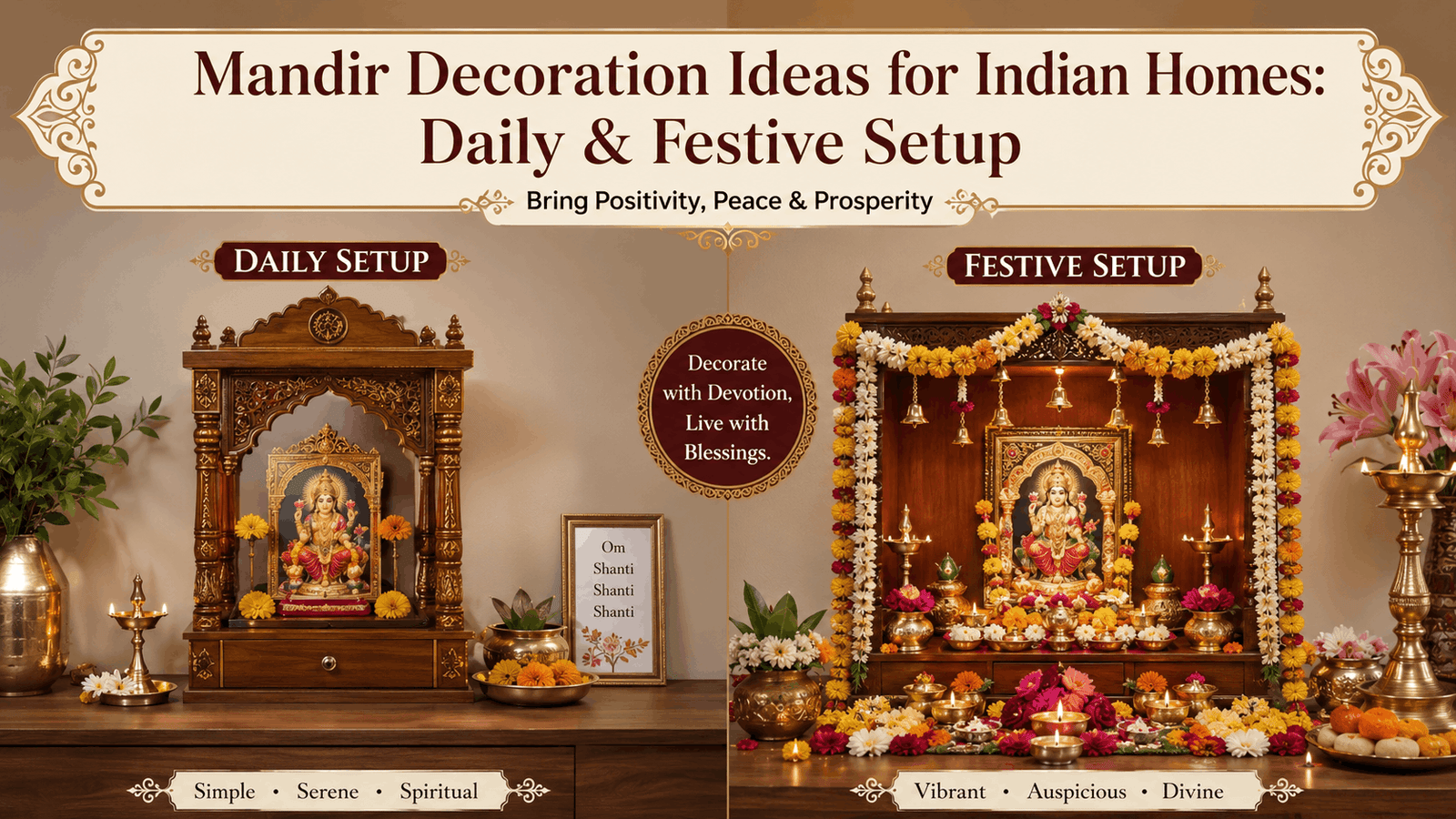
A practical guide to decorating your home temple — for everyday peace, and for the days that really matter.
In most Indian homes, the mandir is not just a corner. It’s the first place we touch in the morning, the last place we look at before sleep, and the heart of every festival. But somehow, when it comes to decorating it, we either go too plain (a couple of idols and a diya) or we go all out only on Diwali and Janmashtami — and forget the rest of the year.
This guide is for everyone in between. Whether you have a small wall-mounted mandir in a 1BHK or a full pooja room in a bungalow, the ideas below will help you set it up properly — not just for festivals, but for daily worship too. Most of the items mentioned here are available directly from us at Hanumant Handicraft, a Jasdan-based manufacturer that’s been supplying homes, weddings, and bulk orders for years.
Let’s get into it.
Why Mandir Decoration Matters More Than You Think
A common mistake people make is treating the mandir like just another shelf to fill up. Spend a few minutes thinking through these three things first — it’ll save you both money and regret.
- Daily peace. A clean, well-arranged mandir gives you a calm space to focus during prayer. Clutter does the opposite.
- Respect to deities. How the idols are seated, what they sit on, what surrounds them — these aren’t decorative choices, they’re devotional ones.
- The energy of the home. This isn’t a vague claim. A mandir that’s looked after changes how the entire house feels.
You don’t need to spend a fortune. You just need the right basics, a sense of balance, and items made with care. That’s where handcrafted pieces beat plastic ones every time — a meenakari chowki carries something a factory-made item simply doesn’t.
🏠 Part 1: The Daily Mandir Setup (What You Actually Need)
For everyday worship, less is more. Overcrowding the mandir makes daily cleaning a chore and clutters the space visually. Here’s the short list of what should always be there:
1. A Proper Chowki or Bajot for the Idols
Never place idols directly on the mandir floor. A raised chowki gives them their rightful seat and creates visual hierarchy — your main deity sits highest, smaller idols arrange around.
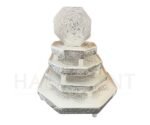
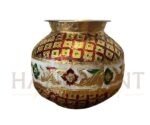
For a daily setup, a traditional wooden pooja bajot works beautifully. If you want something compact and decorative, the Kalash design golden meenakari chowki adds a festive touch even on regular days. For metal lovers, the premium metal bajot in silver, golden or copper is sturdy and easy to clean.
Pro tip: Pick a chowki size that leaves at least 2 inches of breathing room around the idol. Cramped idols look uneasy.
2. A Singhasan for the Main Deity
If you keep Laddu Gopal, Krishna, Ram Darbar, or any deity that traditionally sits on a throne, a handcrafted god singhasan is non-negotiable. It elevates the deity literally and visually, and meenakari work in red, green, and gold instantly makes the mandir look like a small palace.
3. A Jhula for Laddu Gopal
Anyone who keeps Laddu Gopal at home knows — He’s not just an idol, He’s a part of the family. A small swing makes a huge difference to how the mandir feels. The handcrafted jhula for Laddu Gopal and the wider decorative god jhula swing collection are designed exactly for home temples — small footprint, big presence.
4. A Pooja Thali You’ll Actually Use Daily
A heavy, oversized aarti thali looks great in photos but never gets used. For daily aarti, you want something light, easy to clean, and beautiful enough that it stays out on display. The pink stainless steel meenakari pooja thali and the green meenakari aarti plate hit that balance — colourful, practical, and well within ₹500.
A complete daily aarti thali typically holds: a small diya, an incense holder, a tiny bowl for kumkum, another for rice (akshat), and space for one flower. That’s it.
5. Diya, Incense, and One Fresh Flower — Every Day
Decoration without ritual is just display. The diya and agarbatti are what bring the mandir alive. Even on the busiest morning, light one diya. Even one marigold or a tulsi leaf changes the energy.
📐 Part 2: Arranging the Mandir — The Layout That Just Works
People underestimate how much arrangement matters. Here’s a simple framework that works for almost any size of mandir:
- Top tier (highest point): Your kuldevta or main deity — Krishna, Ram, Shiv, Durga, Ganesh — whoever your family worships first.
- Middle tier: Other deities, family deity photos, framed images of gurus or ancestors who’ve passed.
- Bottom tier (chowki level): Smaller utility items — kumkum dabbi, akshat container, ghee bati holder, agarbatti stand.
- Front of the chowki: The pooja thali, ready to go.
For storing pooja essentials neatly, meenakari steel containers are perfect. They keep haldi, kumkum, sindoor, and akshat organized — and they look gorgeous lined up. Way better than mismatched plastic dabbas.
🎉 Part 3: Festive Mandir Decoration — Going All Out (Without Going Overboard)
Festivals are where the mandir really comes alive. The mistake most people make is buying random decorations every year that don’t match the existing setup. Build a base that you can layer onto, festival by festival.
Diwali Decoration
Diwali is the big one. Here’s a setup that works:
- Rangoli at the mandir entrance — even a small one in front of the chowki
- A row of small diyas along the front edge of the bajot
- Fresh marigold and mango leaf toran above the mandir
- A new pooja thali for Lakshmi pooja — many families buy a fresh one every Diwali
- Dhan Kuber kalash setup — a premium meenakari kalash filled with rice and a coconut on top
For Diwali return gifts to relatives who visit, the meenakari dry fruit boxes are a clean, premium choice. Easy to gift, no awkward packaging.
Janmashtami Decoration
This is Laddu Gopal’s day. The whole mandir gets reorganized around Him.
- New clothes (poshak) for the idol
- His jhula decorated with fresh flowers — jasmine, rose petals, anything fragrant
- Peacock feathers placed near Him
- A makhan-mishri bowl in front
- Soft lighting — yellow fairy lights work beautifully
If you don’t already have a proper swing, Janmashtami is the right reason to invest in a good handcrafted god jhula. Once you have it, every Janmashtami after gets easier.
Navratri Decoration
Navratri is nine days of Devi worship — different colours, different moods, every single day. The mandir needs to keep up.
- A photo or idol of Maa Durga in the centre
- Nine small diyas or one akhand jyot
- A red chunari draped over the chowki
- Fresh flowers daily — preferably red hibiscus
- Coconut and sweets offering area in front
Gujarati households especially go all out during Navratri. If you’re planning a traditional setup, the Gujarati wedding items collection has many pieces (kalash, lota sets, decorative bowls) that work beautifully for Navratri too.
Ganesh Chaturthi Decoration
For the 1.5, 5, 7, or 11 days you bring Bappa home:
- A separate decorated chowki just for Him (don’t squeeze Him into the existing mandir)
- Fresh flowers daily — red hibiscus and durva grass are traditional
- A modak plate that stays in front
- Small lights around the setup
A second decorative pooja bajot is honestly worth keeping aside for festivals like this — when you need an extra elevated platform that you don’t want to disturb your daily setup for.
✨ Part 4: Small Touches That Make a Big Difference
These are the things people skip but really shouldn’t:
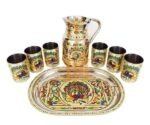
A serving tray for prasad. When relatives come over for festivals, a proper serving tray and glass set with prasad and water glasses looks far more dignified than a steel plate. A peacock design serving tray is the kind of small upgrade that gets noticed.
A decorative key holder near the mandir. Sounds random, but many families place a traditional key holder near the pooja room because they pick up keys right after morning prayers. Make it look like it belongs there.
A jewellery or bangle box for Devi’s ornaments. If you keep gold or silver jewellery for the idols, a small meenakari jewellery box is a far better home than a random plastic pouch.
Fresh flowers, every day. This one isn’t about handicrafts — it’s the cheapest decoration trick that gives the biggest return. Even ₹10 of marigold daily transforms how the mandir looks and smells.
🧹 Part 5: Maintenance — The Boring Part Nobody Talks About
A beautifully decorated mandir that stays dusty for a week defeats the purpose. Some honest, slightly unglamorous advice:
- Wipe daily. A dry cloth on the chowki and idols every morning before lighting the diya. Takes 90 seconds.
- Deep clean weekly. Take everything off, wipe the back wall, the bajot, the floor. Reset.
- Polish meenakari and brass once a month. A soft cloth with a tiny bit of lemon water for brass. For meenakari, just a dry cotton cloth — no chemicals.
- Replace flowers daily. Wilted flowers in the mandir are bad both visually and energetically.
- Refill the diya the previous night, so morning aarti happens without scrambling for ghee.
💰 Quick Budget Guide: What to Spend Where
If you’re setting up a mandir from scratch, here’s roughly how the money should split:
| Item | Why it matters | Approx. spend |
|---|---|---|
| Bajot / Chowki | The literal foundation | ₹250 – ₹500 |
| Singhasan (if needed) | Status to main deity | ₹500 – ₹1500 |
| Pooja Thali | Daily use, gets seen most | ₹150 – ₹500 |
| Jhula (for Laddu Gopal) | Optional but transformative | ₹500 – ₹700 |
| Storage containers | Daily organization | ₹300 – ₹600 |
| Festive decorations | Spread across the year | ₹500 – ₹2000 |
You don’t need to buy everything at once. Start with a chowki and a thali. Add a singhasan when you can. Pick up festive items as the calendar moves.
🛒 Where to Buy: A Note on Choosing Right
A lot of mandir items in the market are mass-produced — plastic painted to look like meenakari, thin metal that bends, prints that fade in two months. For something as personal as your home temple, that just feels wrong.
Buying directly from a handicraft manufacturer like Hanumant Handicraft cuts out the middlemen, keeps the price honest, and supports rural artisans in Gujarat who actually make these items by hand. The full handicraft collection is worth scrolling through once — you’ll spot pieces you didn’t even know you needed.
If you’re shopping for a wedding or housewarming, the related guides on meenakari handicraft items for gifting and return gifts under ₹500 are worth a read.
Final Thought
The best-decorated mandirs aren’t the ones with the most stuff. They’re the ones that look loved — clean, fresh-flowered, lit with one steady diya, and arranged with intention. Start with the basics done right, add slowly, and let your home temple grow with your family over the years.
That’s a mandir worth coming back to every single morning.
Need help choosing the right pieces for your mandir? Browse the full range at Hanumant Handicraft or contact the team directly for bulk orders, customizations, and wedding/festive bundles. Free shipping on orders over ₹399, and direct factory pricing — no middlemen, no markups.